
Africa's Critical Minerals Race: The Foundation of Modern Industry
For decades, Africa's economic story was defined by gold, oil, and diamonds. Today, a new asset class is attracting global capital. As the world races to build electric vehicles, AI data centers, and renewable energy systems, global supply chains are converging on one region: Africa.
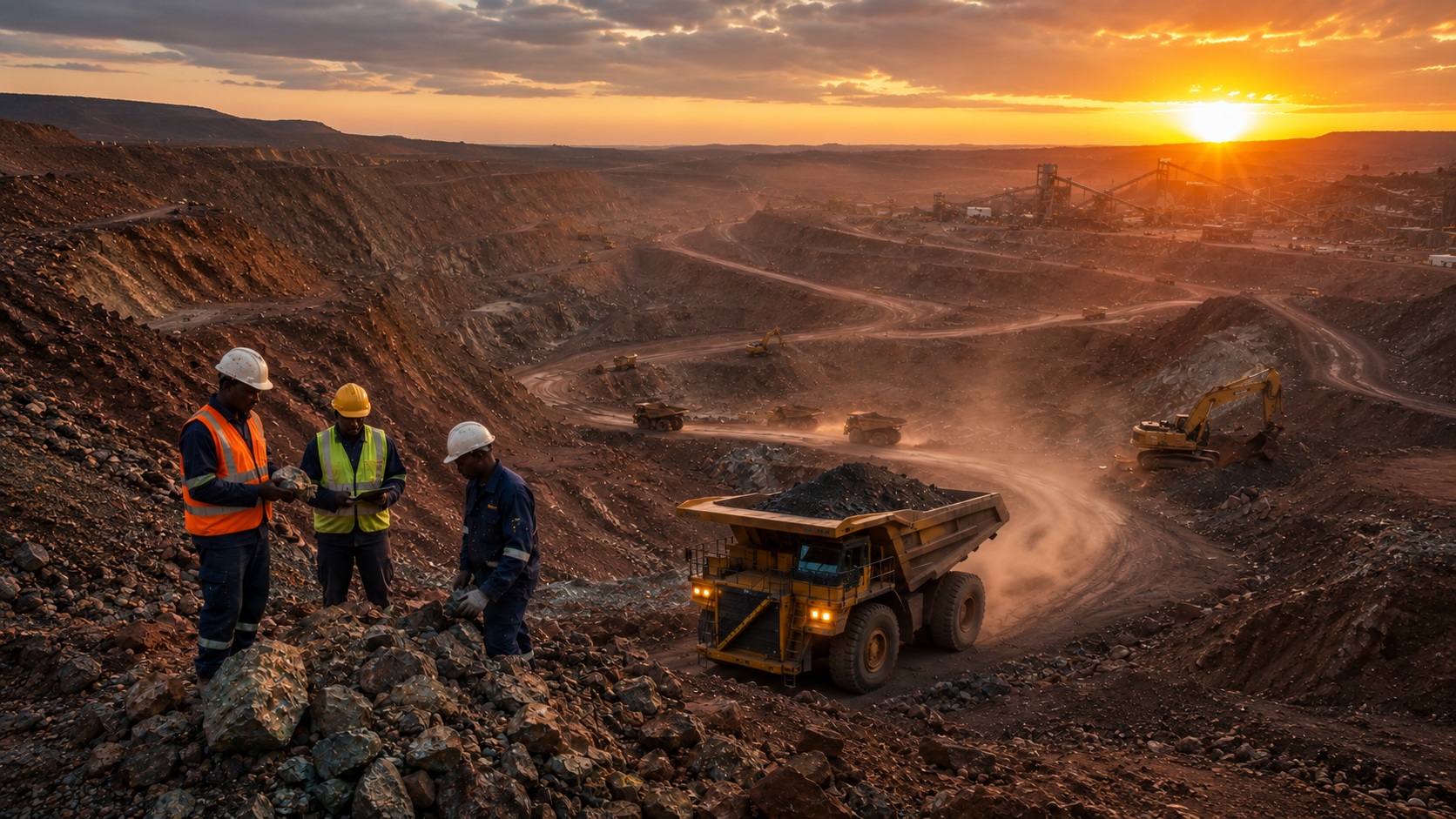
For decades, Africa's economic story was defined by gold, oil, and diamonds. Today, a new asset class is attracting global capital. As the world races to build electric vehicles, AI data centers, and renewable energy systems, global supply chains are converging on one region: Africa.
The unfolding narrative is not just about mining—it is a strategic race to control the physical building blocks of the future economy.
The Materials Powering the Next Era
Every major economic transformation requires a primary resource. The Industrial Revolution relied on coal; the automobile age relied on oil. The digital and energy transition era relies on critical minerals:
- Cobalt: Essential for EV battery stability and energy density.
- Copper: The fundamental backbone of electricity grids and AI data centers.
- Lithium & Graphite: The core components required for high-capacity rechargeable batteries.
- Rare Earth Elements: Critical for the permanent magnets used in wind turbines and defense systems.
Why Africa is the Strategic Epicenter
Several African nations hold dominant shares of the world's mineral reserves, turning them from simple commodity exporters into critical linchpins of global technology supply chains:
- Democratic Republic of the Congo (DRC): Controls over 70% of global cobalt production.
- Zambia: Remains a global superpower in copper reserves.
- Zimbabwe & Namibia: Home to some of the world’s fastest-expanding hard-rock lithium projects.
Superpower Competition & Resource Nationalism
Because these minerals are vital to national security and industrial competitiveness, an intense geopolitical tug-of-war has emerged.