
Gold in Times of War: Why Investors Rush Toward It During Global Crises
Gold’s dramatic rally during the US–Israel–Iran conflict in 2026 followed a well-established pattern seen during major geopolitical crises. Within days of the escalation, gold prices moved past $3,100 per ounce, continuing a powerful upward trajectory that had been building steadily through 2024 and 2025.
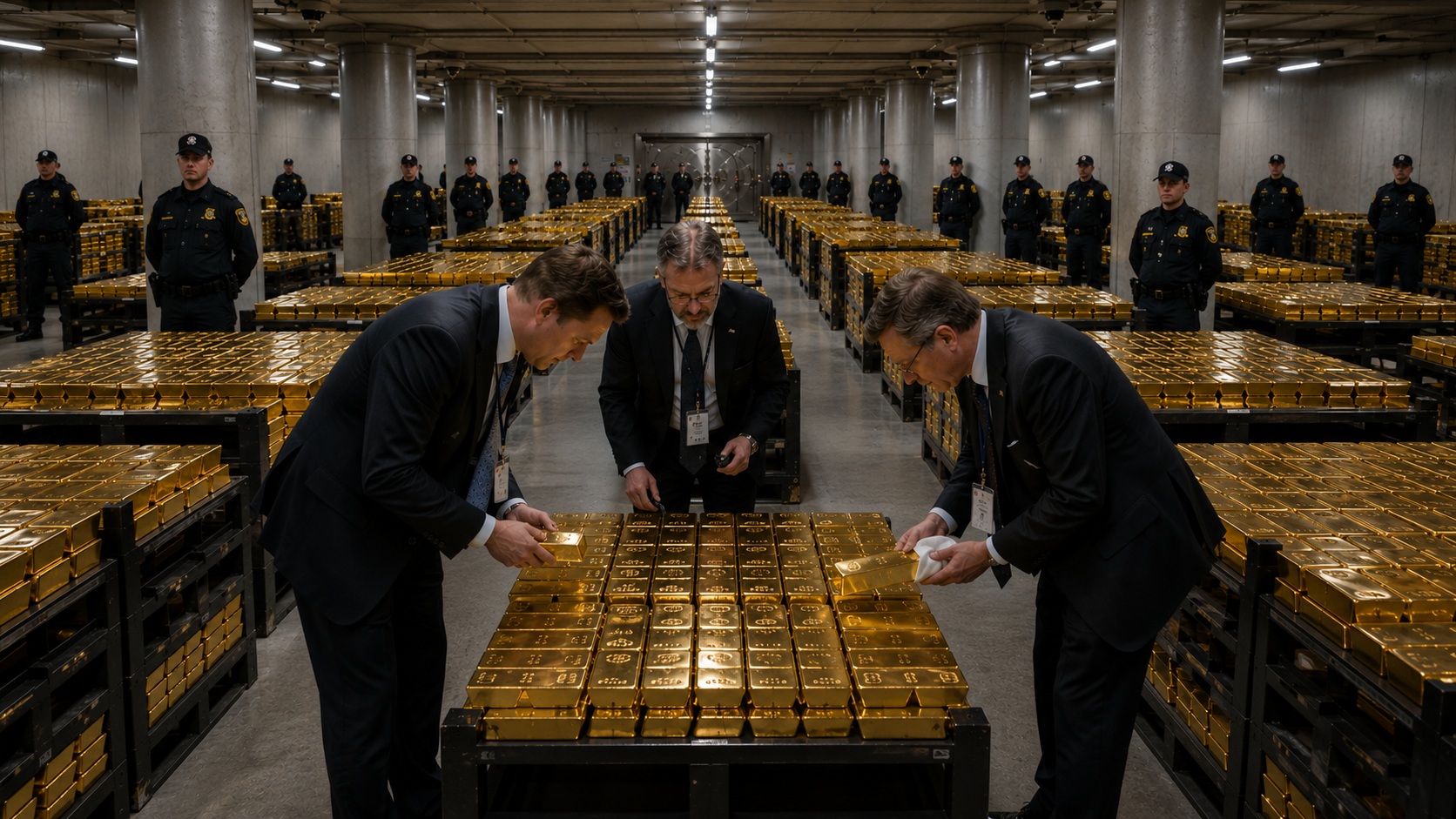
Gold’s dramatic rally during the US–Israel–Iran conflict in 2026 followed a well-established pattern seen during major geopolitical crises. Within days of the escalation, gold prices moved past $3,100 per ounce, continuing a powerful upward trajectory that had been building steadily through 2024 and 2025.
The underlying reason lies in gold’s unique position within the global financial architecture. It is an asset viewed not merely as a tangible commodity, but as a ultimate form of financial insurance during periods of acute systemic uncertainty.
Why Gold Behaves Differently
Gold is fundamentally distinct from standard financial instruments because it carries zero counterparty risk. Most traditional assets—such as government bonds, bank deposits, and equities—rely entirely on the solvency and stability of the issuing institutions. Gold, by contrast, retains its intrinsic worth independent of any sovereign government, central bank, or corporation.
This independence makes it exceptionally attractive during geopolitical crises, when the stability of global financial systems, fiat currencies, and international payment networks comes into question. During the 2026 tensions, investor anxiety extended far beyond oil price shocks; markets actively hedged against:
- Broad escalations across the Middle East chokepoints.
- Physical disruptions to vital maritime trade routes.
- The deployment of severe financial sanctions and asset freezes.
- Widespread volatility across global equity markets.
A Historical Blueprint of Crisis Protection
The direct correlation between geopolitical conflict and surging gold prices has repeated itself throughout modern financial history. Capital consistently flows toward independent stores of value when institutional stability wavers:
- 1973 Oil Crisis: Gold prices spiked sharply alongside regional tensions and sudden energy supply shocks.
- 1979–1980 Geopolitical Turmoil: The Soviet invasion of Afghanistan and the Iranian hostage crisis drove gold to what were then historic highs.
- Post-9/11 Era: The onset of the global war on terror initiated a multi-year upward cycle for precious metals amid heightened global uncertainty.
- 2022 Russia–Ukraine War: Gold crossed the $2,000 per ounce threshold as investors rapidly rotated into defensive, non-yield-bearing assets.
The Structural Central Bank Shift
Beyond private investor flows, a massive structural shift has occurred through large-scale central bank gold accumulation. Between 2022 and 2025, global monetary authorities accumulated gold reserves at historically unprecedented levels, led by nations such as China, India, Poland, and Turkey.
This institutional demand is deeply geopolitical. After western nations froze roughly $300 billion of Russian central bank assets in 2022, developing economies reassessed the vulnerabilities of holding their sovereign reserves inside dollar-based financial systems. Domestically stored gold became an essential strategic asset because:
- It cannot be digitally frozen or seized by foreign powers.
- It functions independently of western-controlled payment infrastructures (like SWIFT).
- It accelerates a broader diversification away from dollar-dominated reserve systems.
What the Price Signals About the Future
Gold acts as a financial thermometer for genuine systemic fear. Short-lived price spikes typically imply that markets view a conflict as a temporary disturbance. However, sustained rallies—such as the one witnessed in 2026—signal a deeper, structural repositioning.
Even as stock markets partially stabilized after the initial shock, gold prices remained elevated. This persistence indicates that global capital is not pricing the current environment as a brief disruption, but rather as a permanent escalation in global macroeconomic and geopolitical risk.
In an increasingly fragmented world where currencies, trade routes, and financial systems are weaponized, the ultimate GeoFinance lesson is clear: when the modern financial infrastructure encounters severe stress, the global economy invariably returns to its oldest anchor of stability.