
India's Plastic Money Experiment: Why the Future of Cash May Be Made of Polymer
For years, discussions about the future of money have focused on digital payments, QR codes, and cashless economies. Yet while digital transactions continue to surge, central banks across the world are quietly investing in something much older: physical currency. India may soon join that trend.
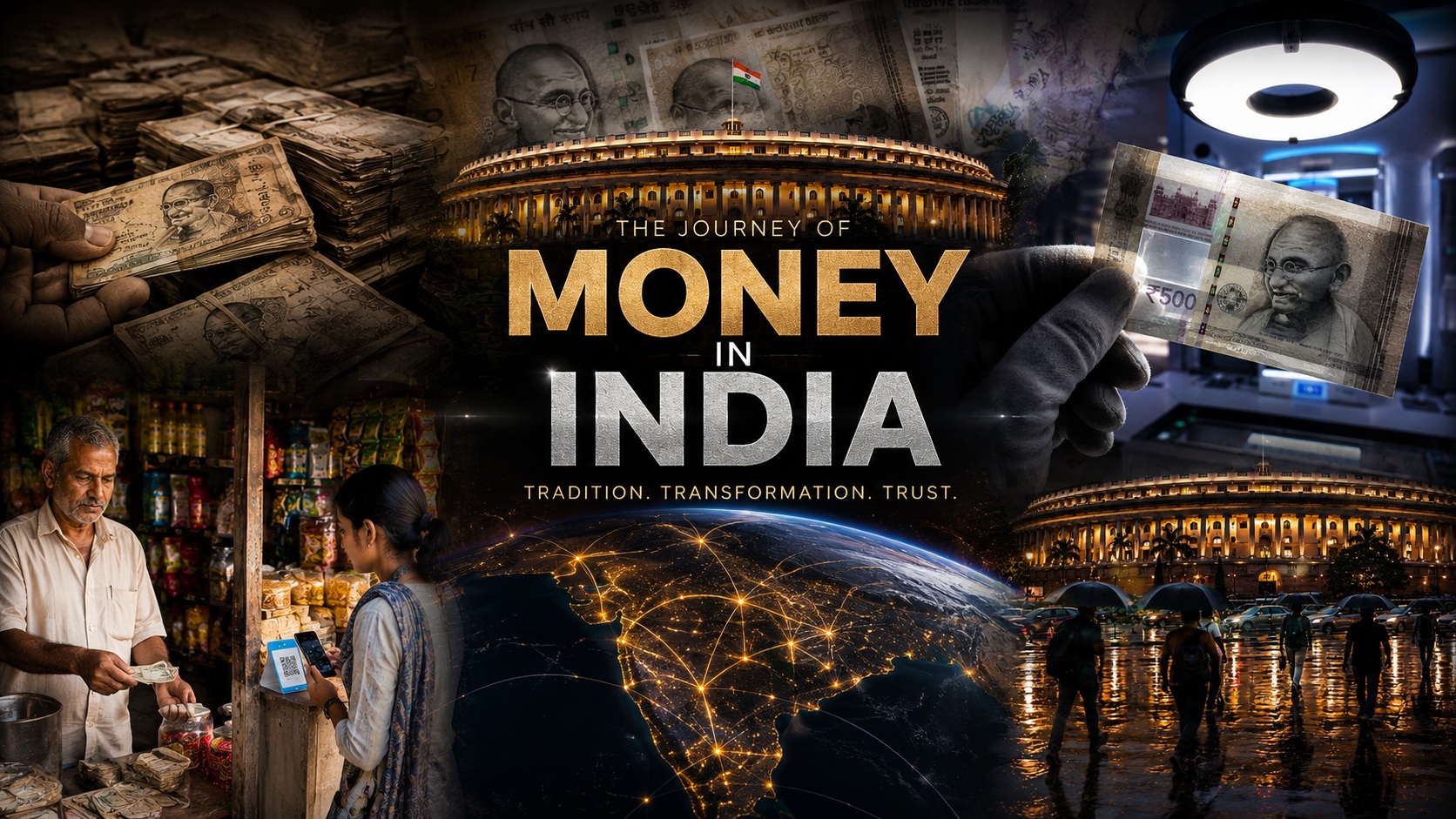
India's Plastic Money Experiment: Why the Future of Cash May Be Made of Polymer
For years, discussions about the future of money have focused on digital payments, QR codes, and cashless economies. Yet while digital transactions continue to surge, central banks across the world are quietly investing in something much older: physical currency.
India may soon join that trend.
The Reserve Bank of India (RBI) is actively revisiting the idea of introducing polymer banknotes, a technology already adopted by countries such as Australia, Canada, Singapore, and the United Kingdom. While the move may appear to be a simple currency redesign, it reflects a broader effort to modernize India's financial infrastructure.
What Are Polymer Banknotes?
Unlike conventional notes made from cotton-based paper, polymer banknotes are produced using a durable plastic substrate called Biaxially Oriented Polypropylene (BOPP).
The technology was first introduced in Australia in 1988, and today, approximately 60 countries utilize polymer currency. Polymer notes are designed to withstand moisture, dirt, folding, and daily wear far better than traditional paper currency. As a result, they remain in circulation for significantly longer periods before requiring replacement.
Why Is India Exploring Polymer Notes?
The primary objective is not aesthetics but financial and operational efficiency. India manages one of the largest cash circulation systems in the world, and maintaining that network comes with substantial operational costs.
The RBI's recent board meetings in Patna and Mumbai highlighted three major triggers for this structural shift:
- Surging Cash Demand: Despite rapid digital payment growth through platforms like UPI, Currency in Circulation (CiC) has hit a record high of ₹42.86 trillion, growing over 11% year-on-year.
- Skyrocketing Printing Expenditures: The RBI’s cost of printing banknotes jumped from ₹5,101.4 crore to ₹6,372.8 crore due to the sheer volume of fresh currency needed.
- The Damaged Currency Burden: In a single year, the RBI had to dispose of 23.8 billion pieces of soiled banknotes (with ₹500 and ₹100 notes being the most damaged), a 12.3% increase from the previous year.
Polymer notes offer a direct fix to these strains by introducing longer circulation life, reduced replacement frequency, improved durability, and enhanced security features. For a country where billions of notes circulate annually, even small improvements in note longevity can create massive savings over time.
The Counterfeit Challenge
Trust is the foundation of every monetary system. Modern polymer banknotes can incorporate sophisticated security features, including:
- Transparent windows
- Holographic elements
- Advanced authentication inks
These features make counterfeiting considerably more difficult compared to traditional paper notes. As financial systems become increasingly interconnected, maintaining confidence in physical currency remains a strategic priority for central banks worldwide.
The Economics Behind Durability
One common misconception is that polymer notes are cheaper to produce. In reality, the initial production cost is often higher. However, the economics improve drastically over the note's lifecycle.
A polymer note typically lasts three to four times longer than its cotton-paper counterpart, often surviving 7+ years in circulation. A note that remains intact for several years longer requires fewer replacements, lower printing volumes, and reduced logistical handling. The result is a system that may be more expensive upfront but is far more efficient over the long term.
Why This Matters in a Digital India
At first glance, investing heavily in physical currency infrastructure may seem contradictory. After all, India's digital payment ecosystem continues to expand rapidly through UPI. Yet this is precisely what makes the story interesting. India is witnessing two parallel trends:
- Digital payments continue to grow at record paces.
- Cash remains deeply embedded in the daily economic habits of the population.
Rather than replacing one another, physical and digital payment systems increasingly function as complementary layers of financial infrastructure.
The Bigger GeoFinance Story
The polymer note debate is not really about banknotes—it is about resilience. Financial systems are strongest when they offer multiple layers of reliability. Digital networks enable speed and convenience, while physical currency provides a dependable fallback during technological disruptions, connectivity issues, or systemic emergencies. This makes cash not merely a payment method but a critical component of national economic infrastructure.
India is not entirely new to this experiment. In 2012, a field trial of 1 billion ₹10 polymer notes was launched across five cities with distinct climates. That initial trial was shelved due to technological constraints—specifically, ATMs struggling to process the material.
Today, central bank sources emphasize that technology has caught up, and solutions have been engineered to ensure modern ATMs can smoothly identify and dispense polymer notes. The RBI is expected to launch a new pilot project focused on low-denomination notes like ₹10 and ₹20, which wear out fastest.
Impact Matrix
- Currency Durability: ↑ Higher
- Counterfeit Resistance: ↑ Enhanced
- Cash Infrastructure Efficiency: ↑ Optimized
- Long-Term Currency Management Cost: ↓ Reduced