
Norway's Wealth Machine: How a Small Country Turned Oil Into a Trillion-Dollar Future
How Norway avoided the "resource curse" by transforming finite North Sea oil revenues into a $2.1 trillion sovereign wealth fund, offering a masterclass in strategic capital allocation and institutional discipline.
Norway's Wealth Machine: How a Small Country Turned Oil Into a Trillion-Dollar Future
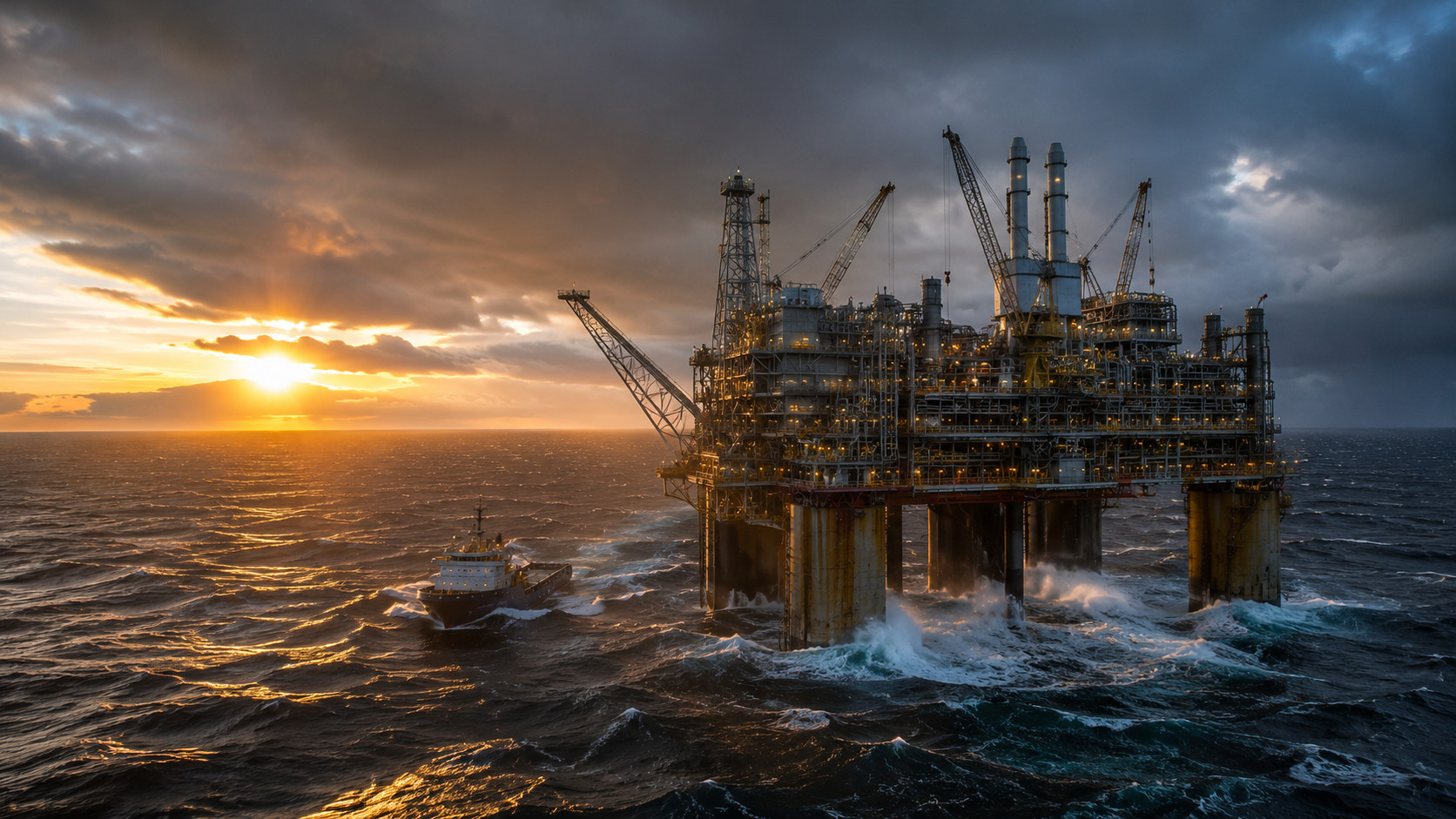
When oil was discovered in the North Sea during the late 1960s, Norway faced a decision that has shaped its future for generations. Many resource-rich countries have experienced rapid growth following major energy discoveries, only to face economic instability, inflation, and structural dependence on a single commodity years later.
Norway chose a different path. Today, the country operates the world's largest sovereign wealth fund, with assets exceeding $2.1 trillion (21.2 trillion Norwegian kroner), making it one of the most successful examples of long-term resource management in modern economic history.
The Discovery That Changed Everything
The turning point came in 1969, when massive oil reserves were discovered at the Ekofisk field in the North Sea. For a country of fewer than 6 million people, the discovery presented an enormous economic opportunity.
However, Norwegian policymakers recognized an important structural challenge: natural resources are finite. Oil revenues could generate prosperity for a few decades, but eventually, the resource would deplete. The question was simple: How could temporary oil wealth create permanent national wealth?
Building a Wealth Machine
Crucially, rather than spending its petroleum revenues immediately to artificially inflate the domestic economy, Norway established the Government Pension Fund Global in 1990, receiving its first capital injection in 1996. The objective was straightforward: convert non-renewable oil resources into diversified financial assets that could generate stable returns for future generations.
Instead of concentrating wealth domestically, the fund invests exclusively abroad across 68 countries and 34 currencies to insulate the local economy. Managed by Norges Bank Investment Management (NBIM), the fund acts as the world's largest single investor, owning a small stake (averaging 1.5% globally and over 2.3% in Europe) in more than 7,200 listed companies, including technology leaders like Nvidia, Apple, and Microsoft.
Avoiding the "Resource Curse"
Many commodity-producing nations face what economists call the "resource curse" or "Dutch Disease"—where a booming resource sector strengthens the currency, making other domestic industries uncompetitive and leading to government overspending.
Norway systematically avoided these challenges through a strict fiscal framework known as the Handlingsregelen (The Fiscal Rule):
- The Spending Cap: The government can generally only withdraw a long-term average of 3% of the fund’s total value each year to finance its national budget.
- The Backstop: By transferring all oil surpluses abroad into the fund, Norway prevents the domestic currency (the Krone) from over-appreciating, protecting local manufacturing and services.
Why Norway Matters Beyond Oil
At first glance, this appears to be an energy story. In reality, it is a masterclass in strategic capital allocation. Norway successfully executed a grand transition:
Finite Oil Wells ──► Perpetual Financial Assets
By compounding global stock returns—which reached a historic performance driven by tech and banking rallies—the returns on investments now account for more than half of the fund's total cumulative value, far outstripping the original cash deposited from oil sales.
The GeoFinance Perspective
The most valuable resource Norway discovered was not oil—it was institutional discipline. By converting temporary resource revenues into global financial assets, the country effectively transferred wealth seamlessly across generations. This demonstrates a core GeoFinance principle: natural resources create temporary opportunities, but institutions determine permanent outcomes.
As countries enter a new era of geopolitical competition for critical minerals, rare earths, and clean energy assets, Norway's experience offers an essential blueprint. The ultimate test of economic power is no longer how much a country can extract from the ground; it is how effectively it can preserve, diversify, and compound the value of what it produces to weather future economic shocks.