
Strategic Equilibrium: Decoding the 2026 Trump–Xi Summit in Beijing
Donald Trump’s May 2026 state visit to Beijing was presented as a high-level diplomatic summit focused on trade and geopolitical stability. But beneath the ceremonial meetings and carefully managed optics, the visit reflected something much larger: the growing reality that the United States and China remain economically interconnected even as strategic rivalry intensifies.
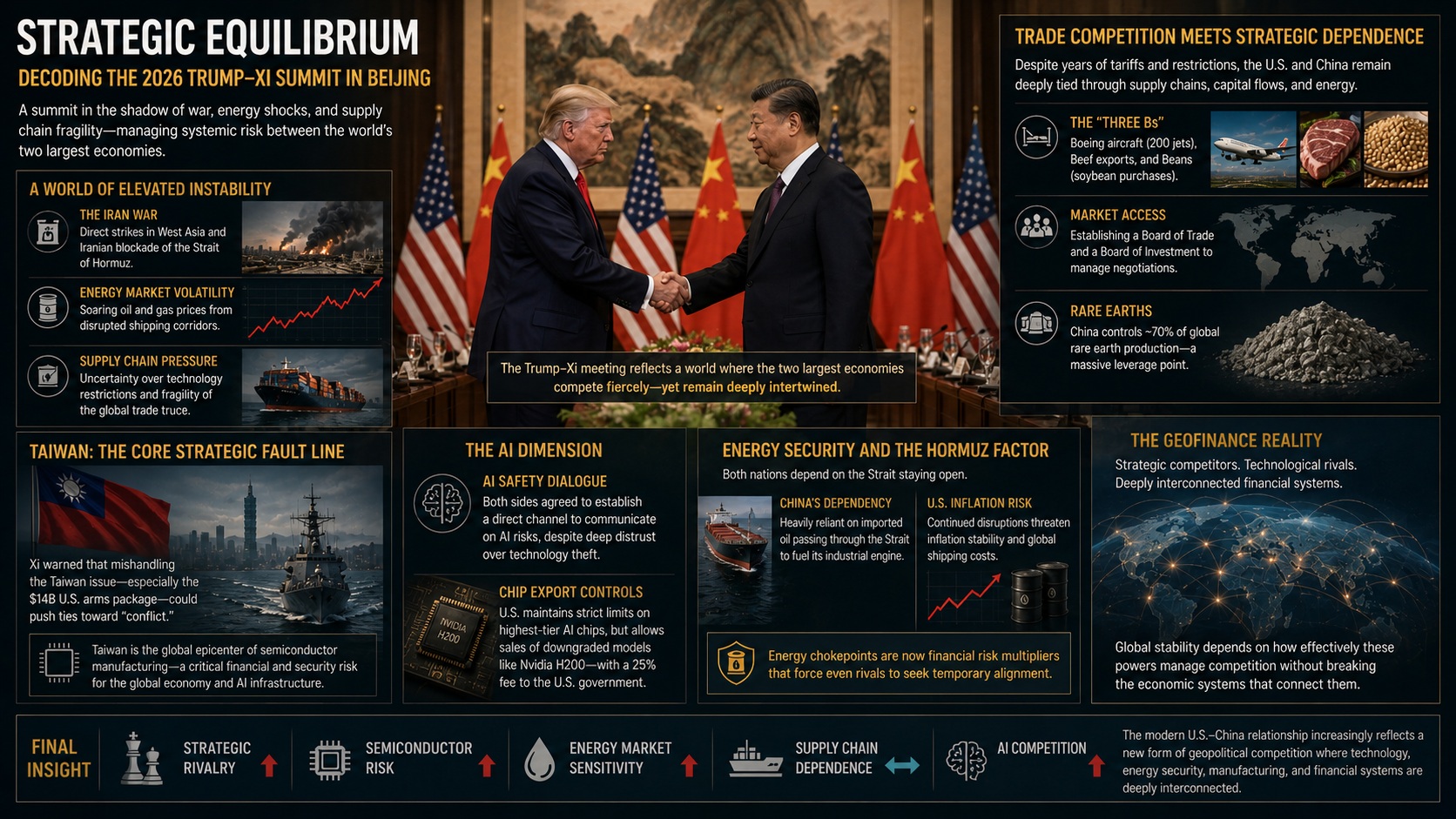
Strategic Equilibrium: Decoding the 2026 Trump–Xi Summit in Beijing
Donald Trump’s May 2026 state visit to Beijing was presented as a high-level diplomatic summit focused on trade and geopolitical stability. But beneath the ceremonial meetings and carefully managed optics, the visit reflected something much larger: the growing reality that the United States and China remain economically interconnected even as strategic rivalry intensifies.
The summit took place during a period of elevated global instability, specifically marked by:
- The Iran War: Direct strikes in West Asia and the subsequent blockade of the Strait of Hormuz by Iranian forces.
- Energy Market Volatility: Soaring oil and gas prices caused by the disruption of critical shipping corridors.
- Supply Chain Pressure: Continued uncertainty regarding technology restrictions and the fragility of the global trade truce.
Against this backdrop, the meeting became less about “solving” U.S.–China tensions and more about managing systemic risk between the world’s two largest economies.
Trade Competition Meets Strategic Dependence
Despite years of tariffs, export controls, and technology restrictions, the U.S. and China remain deeply tied through manufacturing supply chains, capital markets, and energy flows. This creates a modern geopolitical paradox: the two countries are strategic competitors, yet neither can fully detach from the other without major global economic consequences.
During the summit at the Great Hall of the People, discussions covered a broad spectrum of "GeoFinance" interests:
- The "Three Bs": Trump emphasized three key metrics for the relationship—Boeing aircraft (a deal for 200 jets), Beef exports, and Beans (soybean purchases).
- Market Access: Establishing a Board of Trade and a Board of Investment to manage direct negotiations over goods and non-sensitive investments.
- Rare Earths: Addressing China's control over 70% of global rare earth production, which remains a massive leverage point for Beijing.
Taiwan: The Core Strategic Fault Line
One of the most sensitive moments of the visit centered on Taiwan. Chinese President Xi Jinping reportedly warned that mishandling the Taiwan issue—particularly regarding the pending $14 billion U.S. arms package—could push bilateral relations toward “conflict.”
The significance of Taiwan goes beyond military tensions. As the global epicenter for semiconductor manufacturing, the Taiwan question is a major financial risk capable of disrupting AI infrastructure development, global manufacturing, and total financial market sentiment.
The AI Dimension
Artificial intelligence emerged as a strategic theme, with both sides viewing it as a long-term determinant of economic productivity and military capability.
- AI Safety Dialogue: The leaders discussed a direct channel for communication on AI risks, despite deep distrust regarding technology theft.
- Chip Export Controls: While the U.S. maintains strict limits on the highest-tier AI chips, Trump has allowed the sale of downgraded models, such as Nvidia's H200, provided the U.S. government receives a 25% fee from the sales.
Energy Security and the Hormuz Factor
A major backdrop to the summit was the instability surrounding the Strait of Hormuz. Both Washington and Beijing emphasized the vital importance of keeping the route open.
- China’s Dependency: Beijing remains heavily dependent on imported oil passing through the Strait to fuel its industrial base.
- U.S. Inflation: For the United States, continued disruptions threaten inflation stability and global shipping costs.
This reinforced a larger reality: energy chokepoints have become financial risk multipliers that force even the fiercest rivals to seek temporary alignment.
Bottom Line: The GeoFinance Reality
The Trump–Xi meeting reflected a world where the two largest economies are simultaneously strategic competitors, technological rivals, and deeply interconnected financial systems. The defining reality of the modern era is that global stability now depends on how effectively these powers manage competition without breaking the economic systems that connect them.
FINAL INSIGHT
The modern U.S.–China relationship increasingly reflects a new form of geopolitical competition where technology, energy security, manufacturing, and financial systems are deeply interconnected.