
The New Copper Race: Why the World Is Competing for a Metal Once Taken for Granted
For decades, petroleum and crude oil reserves were viewed as the bedrock of global industrial dominance and geopolitical power. Today, another foundational material is quietly ascending to that same level of structural importance: copper.
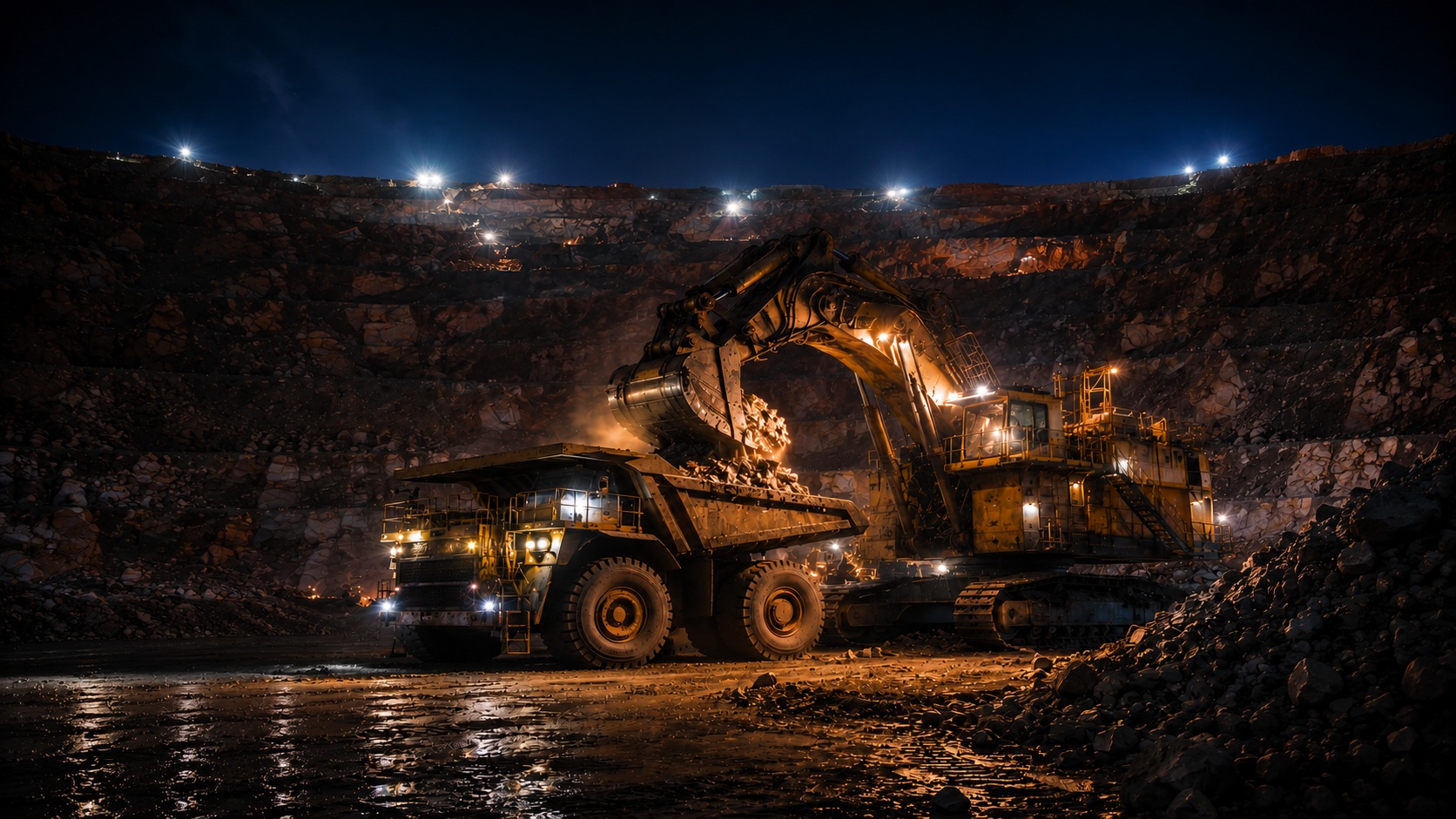
The New Oil: How Copper is Redefining Global Geopolitics and the AI Economy
For decades, petroleum and crude oil reserves were viewed as the bedrock of global industrial dominance and geopolitical power. Today, another foundational material is quietly ascending to that same level of structural importance: copper.
Frequently referred to as the “metal of electrification,” copper sits directly at the center of the modern global economy. It is the indispensable material that powers electric vehicles (EVs), next-generation data centers, artificial intelligence (AI) infrastructure, high-voltage power grids, modern military systems, renewable energy networks, and advanced industrial manufacturing.
As the international community accelerates toward a highly digitized and electrified future, global consumption of copper is rising at a pace that vastly outstrips the development of new mining pipelines. Consequently, what was once transacted as a standard base industrial commodity is increasingly being managed by sovereign nations as a critical strategic asset.
Why Copper Matters More Than Ever
Modern global economies are undergoing a structural shift to become dramatically more electricity-intensive, moving away from direct fossil fuel combustion. This transformation places copper in an unprecedented demand cycle due to its exceptional thermal and electrical conductivity:
- Electric Mobility: Battery electric vehicles (BEVs) require nearly three times as much copper wiring and rotor material as traditional internal combustion engine vehicles.
- Renewable Energy Architecture: Clean energy generation systems—including large-scale solar arrays, offshore wind turbines, and utility-scale battery storage facilities—rely heavily on copper for internal components and transmission hookups.
- The AI Infrastructure Boom: Artificial intelligence has emerged as the most power-dense workload in computing history. The massive expansion of hyperscale data centers requires vast amounts of copper for heavy-duty power distribution units, grounding systems, and advanced cooling technologies.
In short, the entire future of the global economy is being built on the foundation of electrification, and electrification cannot physically function without copper.
The Looming Supply Shortage
The primary challenge facing the global economy is that the primary production of copper cannot expand rapidly enough to meet this accelerating consumption curve. Bringing a major copper asset from initial discovery to active commercial production takes an average of 14 to 17 years due to structural bottlenecks:
- Protracted exploratory phases and declining average ore grades in existing fields.
- Complex environmental permitting processes and intense localized community pushback.
- Escalating capital expenditure requirements for deep underground mining operations.
Furthermore, a significant portion of the world's remaining unmined copper reserves is heavily concentrated in geographically specific and politically sensitive regions—most notably across Chile, Peru, and parts of the Central African Copperbelt. As global supply deficits emerge, sovereign governments are intervening more directly in metal markets, shifting their policies from laissez-faire trade toward strict resource sovereignty and national industrial protectionism.
China’s Quiet Dominance in Processing
While Western economies have only recently begun classifying copper as a critical mineral, China recognized the strategic necessity of industrial metals decades ago. Through long-term state planning, Beijing aggressively built up systemic dominance across the middle and lower sections of the metal value chain.
Though a significant portion of global raw copper ore is extracted in South America and Africa, China controls the vast majority of the world’s refined copper production and chemical processing infrastructure. This concentrated industrial capacity creates a notable dependency risk for other nations attempting to build out domestic clean energy grids, defense industrial bases, and AI hardware clusters independently.
The New Geopolitical Reality: The conversation has expanded beyond securing raw mining extraction; it is fundamentally about controlling the processing infrastructure that powers the future.
The Energy Transition Emerges as a Commodity Race
The global transition toward clean tech is evolving from an environmental initiative into a large-scale international resource competition. Industrial nations now face a highly complex balancing act:
- Accelerating domestic energy transitions to meet emissions mandates.
- Securing reliable, long-term industrial supply chains for raw inputs.
- Reducing vulnerabilities to single-country geopolitical dependencies.
- Mitigating the rising input costs of building infrastructure during a commodity crunch.
This tension has triggered a global wave of state-backed mining investments, international resource diplomacy, preferential trade agreements, and direct industrial subsidies (such as the deployment of export-import bank financing and national defense stockpiles) as blocs compete to lock down mineral volumes before structural shortages intensify.
Copper as the Hardware Linchpin of the AI Economy
One of the most consequential drivers of the current copper market is the physical footprint of the artificial intelligence boom. The expansion of AI computation relies on high-capacity electrical systems that require a high intensity of copper usage.
Per megawatt (MW) of data center capacity, an estimated 30 to 47 metric tons of copper are required to support basic infrastructure, including power transformers, switchgears, and high-voltage cabling. Furthermore, the extreme rack density of AI training clusters has caused lead times for electrical grid hardware to stretch significantly.
This reality demonstrates that the ongoing global AI race is not solely defined by software optimization, mathematical algorithms, and advanced semiconductors—it is fundamentally bound to physical access to energy grids and the industrial metals required to construct them.
The Deeper GeoFinance Transformation
The accelerating race for copper reflects a broader structural transformation within global macroeconomics. Throughout the 20th century, geopolitical influence and currency alignments were explicitly linked to the control, transport, and pricing of hydrocarbons.
In the 21st century, macroeconomic resilience is increasingly dictated by a nation's position within the supply chains of advanced technologies: semiconductors, high-voltage electricity infrastructure, and critical transition minerals. Consequently, industrial inputs that were traditionally viewed as ordinary cyclical commodities are now being integrated directly into national security frameworks, sovereign wealth strategies, and foreign policy maneuvers.
The Bottom Line
Copper has outgrown its legacy classification as a basic construction and manufacturing material. It has transitioned into one of the core foundational strategic resources of the modern economic order.
The overarching GeoFinance lesson of this era is that the future global balance of power may be shaped not just by the nations that control the flow of primary energy, but by the nations that secure the physical materials required to electrify, digitize, and connect the global economy.